
In this week’s Elie v. US, our justice correspondent delves into 7 cases that got overlooked in the end-of-term frenzy.
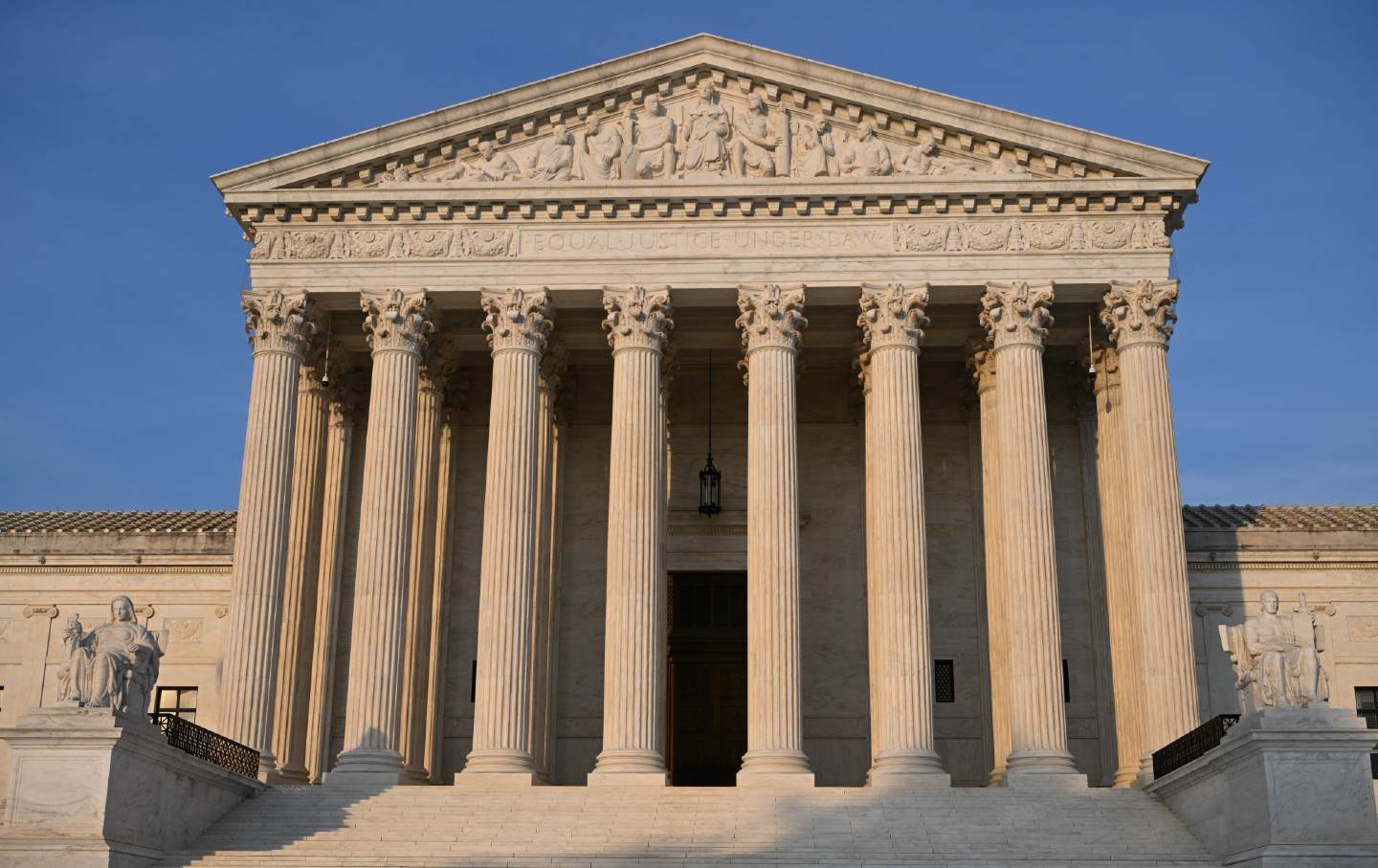
The Supreme Court’s term ended this week amid a flood of consequential—and in many cases, disastrous—rulings. I used to believe the institutionalists who claim that the court releases opinions “when they’re ready”—and that the reason the most important cases are clustered around the last week of the term is that those cases are more complicated and therefore take longer for the justices to write.
I no longer believe that. The court’s ruling in Louisiana v. Callais, which murdered the Voting Rights Act, is an example of a complicated, contentious case that the court released in April in order to give Republicans the maximum amount of time to gerrymander their way to victory in the midterms. Meanwhile, the transgender rights ruling that was released on Tuesday was largely unanimous, yet the justices waited to dump it alongside three other rulings, likely because they thought the media would overlook its bigotry in their rush to praise the court for its birthright citizenship decision.
I have been able to write about the court’s rulings on: birthright citizenship, transgender rights, Trump’s ability to fire top regulators, the denial of temporary protected status to Haitians and Syrians, the denial of a Rastafarian prisoner’s right to sue over the violation of his religious freedom, and the liberalization of drug laws—for gun owners. It’s been a busy two weeks.
But there are a number of other important cases I haven’t been able to write about. To counteract the Supreme Court’s version of an end of term “news dump,” I’m going to do a lightning round about cases I think still deserve attention.
National Republican Senatorial Committee v. Federal Election Commission: This was the big campaign finance case this term, and it came out like all the other ones: Billionaires are allowed to buy politics. Alleged attempted rapist Brett Kavanaugh ruled for the 6–3 majority, which broke along normal partisan lines, that dark-money super Pacs are allowed to coordinate with their preferred candidates, which makes a mockery of what few remaining campaign finance restrictions we still have left. You can make an argument that NRSC v. FEC is the most important case about democracy since Citizens United, since the court has used the case to, once again, allow the direct corruption of our politics by moneyed interests.
Watson v. Republican National Committee: This is the mail-in ballots case. The court ruled, 5–4, that states are allowed to accept ballots mailed by Election Day, even if they are received days later. Trump and the Republicans had argued that counting votes after Election Day violates federal law. The case hinged on the definition of the word “choice” –namely the issue of when voters complete the act of choosing a candidate. Amy Coney Barrett, writing for the majority—in what was probably the best decision she’s ever written—argued that the voter’s choice is made when they fill out their ballot and put it in the mail, thus completing the process of choosing by Election Day. Samuel Alito argued, in dissent, that the choice was not made until the ballot was received by an elections official. It’s not surprising to me that Alito, the author of Dobbs v. Jackson Women’s Health, doesn’t understand what “choice” means and thinks one can only be made after the government recognizes it as valid.
Current Issue
Chatrie v. United States: This is an incredibly important case about what constitutes a “search” under the Fourth Amendment, which protects against “unreasonable” searches and seizures. While trying to solve a robbery, police obtained a “geofence warrant” to compel Google to hand over location data from cell phones around 150 meters from the scene of the crime. That led to the arrest of Okello Chatrie, who was eventually indicted based in large part on this geofence data obtained from Google. The Supreme Court ruled, 7-2, that Chatrie was subject to a “search” under the Fourth Amendment and should be allowed to argue that the search was unreasonable. This is a massive win for privacy advocates and anyone who is uncomfortable with the encroachments of the surveillance state. The police sought to get around Chatrie’s individual constitutional rights by arguing that the search was conducted against Google, which agreed to the search, not Chatrie, who did not. The court rejected that argument. I might even turn location data back on now.
Mullin v. Al Orto Lado: This case is about whether the Trump administration can circumvent the Constitution by apprehending asylum seekers before they enter the United States and refusing to let them in. Historically, under both US and international law, people are are entitled to request asylum as soon as they step foot on US soil; but the Trump administration has taken to stopping these people before they cross the border, sometimes just yards away, and claiming that because they didn’t “enter” the US, they have no right to seek asylum. The court ruled, 6-3 along normal partisan lines, that this little trick is constitutional. Obviously, I think the court is wrong. I think you have “reached” the United States at precisely the moment the US reaches you. If agents of the US government can apprehend you, in any country, then you should be able to avail yourself of the laws of the US, to say nothing of international ones. But, as I have pointed out repeatedly, I am not one of the justices on the Supreme Court, and I’m quite bitter about that.
Blanche v. Lau: This is another immigration case. The court ruled, 6–3 along normal partisan lines, that the government doesn’t need evidence of a crime before it can treat an immigrant like a criminal. It’s a shocking ruling but hasn’t been talked about very much because the case is procedurally complicated. Muk Choi Lau was a legal permanent resident who was charged with a crime: counterfeiting. While those charges were pending, he briefly traveled back to China and then attempted to return to his home in the US. But border officials refused to grant him reentry because of the charges, even though he had not been convicted of anything. Border agents eventually allowed to re-enter the country, but on parole, not permanently, pending trial. Lau eventually pleaded guilty to the counterfeiting charge. At that point, the government moved to deport him on the theory that he should be denied “reentry.” Counterfeiting is not a crime that gets legal permanent residents deported, but since the government said he was applying for reentry, they argued that it could exclude him. The only reason Lau was in the procedural position of “reentering” the country was because border officials excluded him when he hadn’t actually been convicted of anything yet. Sam Alito and the Republicans decided that this was fine, that the government needed no evidence that he had actually committed a crime before denying him entry. Our entire immigration system needs to be nuked and rebuilt from the ashes.
Wolford v. Lopez: You knew there was going to be a gun case, right? According to recent Supreme Court precedent, any present-day gun regulation must have an analogue in a gun regulation that existed around the time of the founding. In 2023, Hawai’i passed a law prohibiting guns on private property that is otherwise open to the public (like restaurants). In an effort to comply with the Supreme Court’s ridiculous requirement, the state cited numerous laws prohibiting armaments in public places from around the time of Hawai’i’s admission to the Union (since Hawai’i wasn’t a state in 1789); it also, for good measure, cited a number of regulations dating all the way back to Hawai’i’s days as an independent kingdom. The Supreme Court didn’t care. The court ruled, 6–3 along normal partisan lines, that Hawai’i’s law violates the Second Amendment. The ruling shows that the ammosexuals on the Supreme Court won’t apply their own precedents fairly when it comes to guns. In this case, Hawai’i did literally everything the Republicans ordered it to do before passing a gun regulation, but the Republicans still struck it down. There is no gun regulation that these extremist Republicans will accept. We are doomed to an endless cycle of gun violence and death until we take control of the Supreme Court away from them.
Pung v. Isabella County: OK, I’m not going to lie, I have a weird fascination with “Takings” cases—which is the legal jargon for cases involving the Fifth Amendment protection that says private property cannot be taken for public use without just compensation. At issue in Pung was what “just compensation” actually means. The Pung family owed back property taxes, so the state of Michigan foreclosed on their house. The house was assessed at $194,400, but it sold at public auction for only $76,008. The Pungs argued that they were denied their “just compensation” under the Fifth Amendment. The court, unanimously, disagreed, saying that the Pungs are entitled only to the auction price. The court is probably right about this. And most people I know would probably agree that your house is worth what it sells for, and not what Zillow or a friendly assessor thinks it should be worth, especially when trying to figure out the price taxpayers must pay for the property. But, as I’ve said, I’m a straight-up weirdo about this issue. I think the government should have to pay a high premium to take somebody’s house. If anything, I think the government should pay above market value for somebody’s primary residence. (I become less of a weirdo when it comes to secondary homes or income property.) I think the Pungs got screwed, and the fact that my view conflicts with every other political bone in my body is just an internal hypocrisy I’ve learned to live with.
That’s just the last two weeks at the Supreme Court. (I skipped a few cases that are probably equally important but I don’t understand because they involve math.) It’s been a doozy, and while people will no doubt hear mainstream media cooing about how the court is “impartial” and “nonpartisan,” the reality is that most of the crucial decisions are “6–3, along normal partisan lines.”
Popular
“swipe left below to view more authors”Swipe →
I’m off next week to recharge or, in the alternative, to just give up and die. Happy White Man’s Independence Day.
***
If you enjoyed this installment of Elie v. U.S., click here to receive the newsletter in your inbox each Friday.
More from The Nation
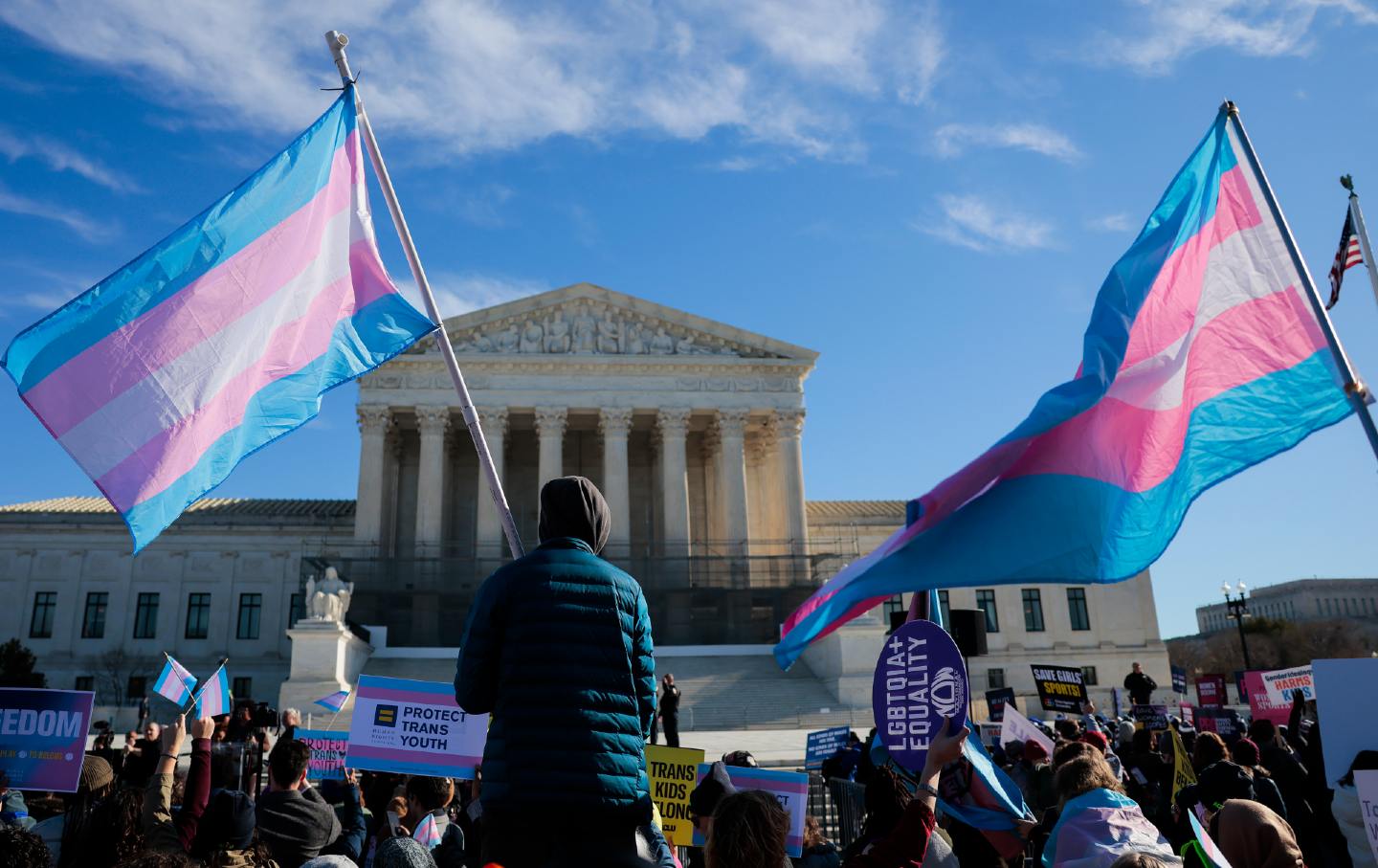
The ruling is about whether trans people have the same rights as everybody else—and the court said they don’t.
Elie Mystal

As Trump went after higher education, Yale built a case for its conservative credentials. The Justice Department came knocking anyway.
StudentNation
/
Zachary Clifton
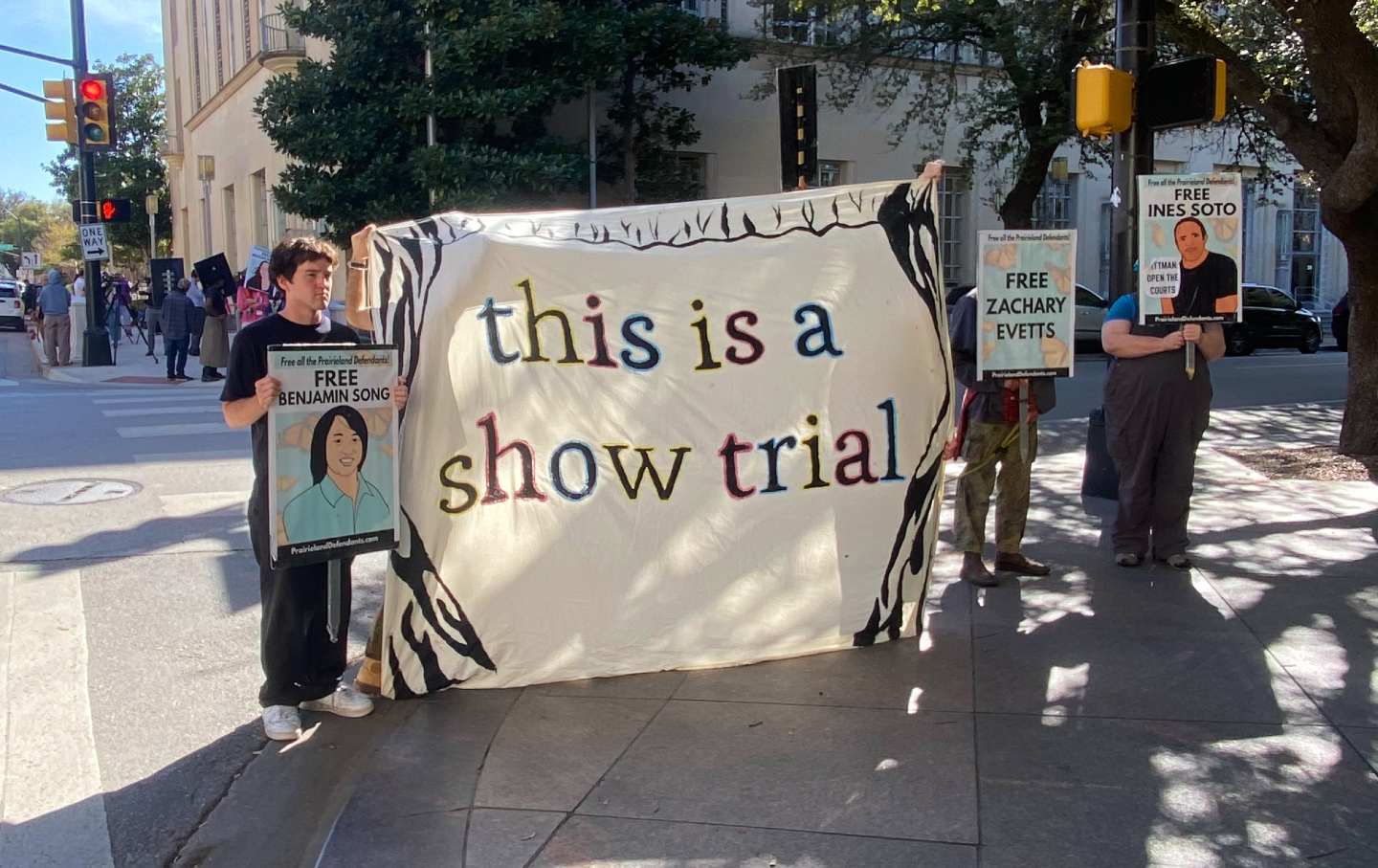
Under Trump, eight Prairieland defendants were sentenced to a combined four and a half centuries in prison.
Sara Van Horn
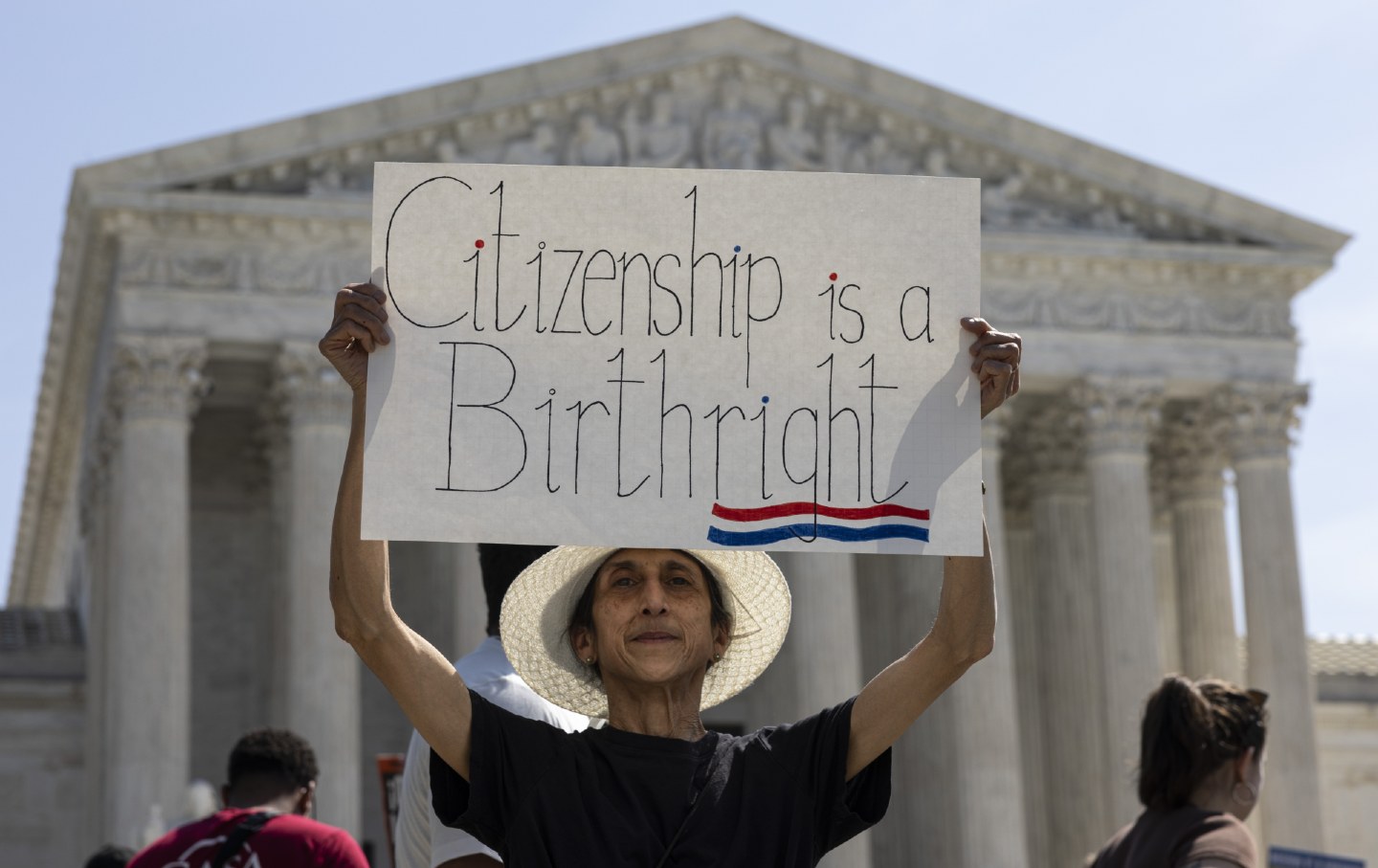
The Supreme Court’s decision upholding birthright citizenship is a victory that may contain the seeds of a future defeat.
Elie Mystal
Workers with college degrees are constantly being pitted against workers without one. But such a zero-sum debate obscures the need to protect everyone in every workplace.
Abdullah Shihipar
The administration may be reluctant to further undermine abortion rights before November, but the abortion-rights movement must stay vigilant.
Julie F. Kay